

Diversification beyond tourism
A step into digital infrastructure and AI.
The benefits we see for the Government, the concerns we expect to hear, and what we intend to do about them: for the people near the island and for the island itself. Everything here is a plan to be agreed with Maldivian authorities and communities, not a finished contract.
An idle island becomes long-term national digital infrastructure.
A step into digital infrastructure and AI.
Lease rent and taxes from an otherwise unused island, unless reduced by Special Economic Zone incentives.
Stronger international connectivity and national AI capacity for government, telecom operators, banks and universities.
A climate-friendly project that fits the national green agenda, with high-skill jobs and training.
The first project under the Uninhabited Islands and Lagoons Act: 21-year leases, extendable to 50.
We would like to work with the Government of the Maldives on AI research centers focused on the environment and other public-interest topics, and on stronger AI education at the Maldives National University. This is an intention we want to explore together, not a commitment.
Joint centers that use the island's compute for questions that matter to the country: climate and sea-level modelling, ocean and reef monitoring, weather and water, and other public-interest work.
Help the Maldives National University develop AI courses, student projects and practical training, with access to real compute for students and researchers.
Topics, governance, location and funding are for the Government and the universities to shape with us. Nothing is fixed yet.
A project like this should expect hard questions. These are the four we hear most.
A 1 MW site needs only a few dozen staff. We say so plainly. What we can do is make those jobs count: first-hire preference for Maldivians, a technician training program that starts before first capacity, local suppliers for island works and a share of compute for universities. See the community plan below.
Most equipment, such as GPUs and power systems, is imported, as for any project of this kind. What stays in the Maldives is lease rent and taxes, local procurement and hiring, and a Maldives-registered operator with a transparent ownership chain. Terms are to be agreed with the Government.
The acquisition fee is a fair question and is part of the lease discussion. The project offers long-term income and national digital capacity, which a resort lease does not provide. The final terms are set with the authorities.
The project is at MOU stage and the lease is not yet confirmed. We build only after approvals and a completed environmental assessment. On geopolitics, the Maldives is neutral ground for customers from different regions; on the environment, see the commitments below.
The project is led by a Maldives-registered operator. These are the commitments we are building into the plan with Maldivian partners, authorities and the communities nearest the island.
Roles the island needs, to be filled locally first · Portraits are generated images, not project staff
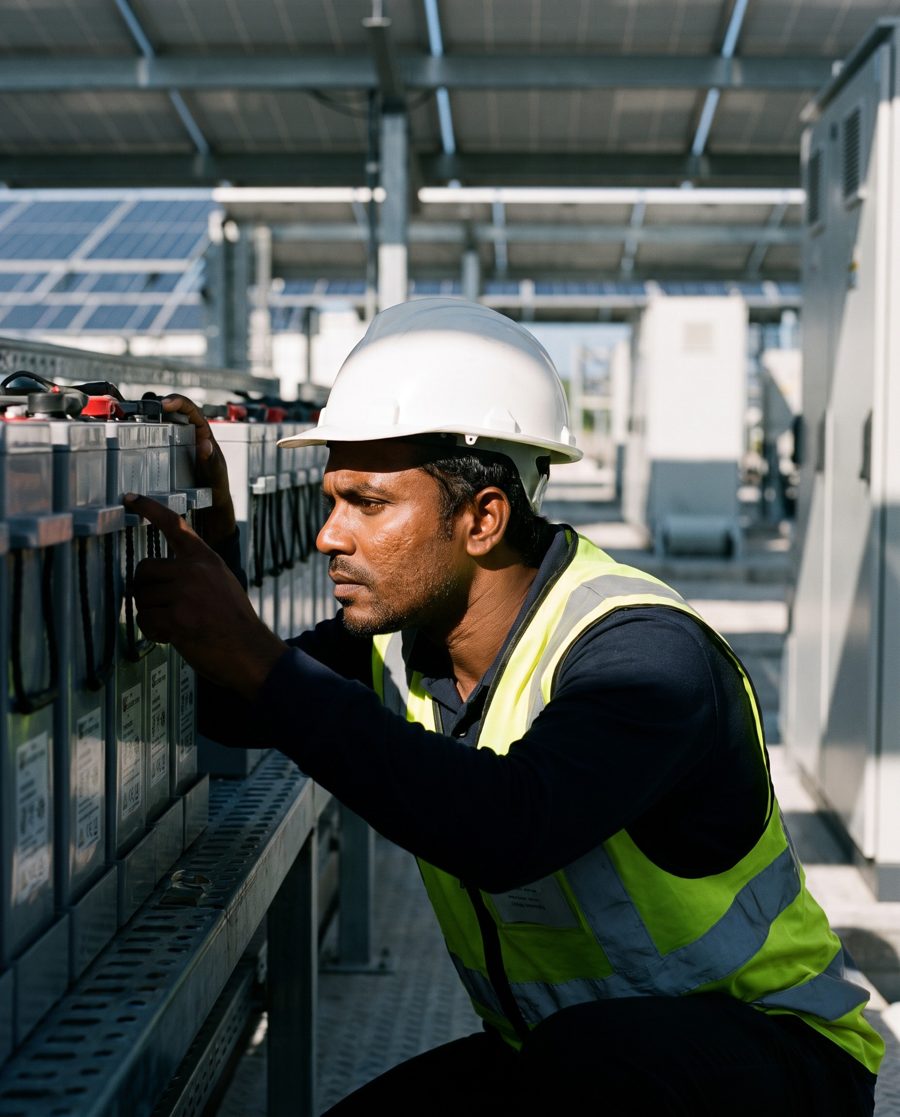 ElectricianSwitchgear, batteries and solar strings on raised platforms.
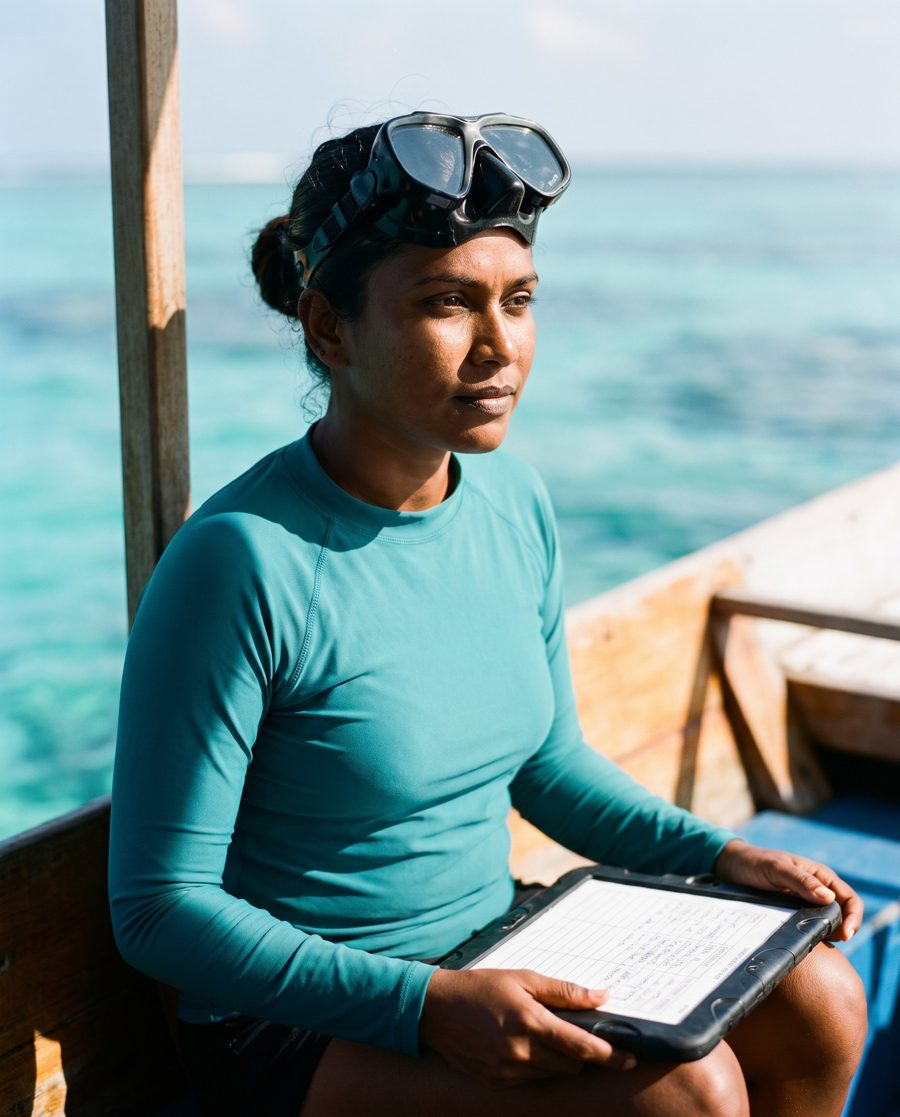 Marine biologistReef surveys before, during and after construction.
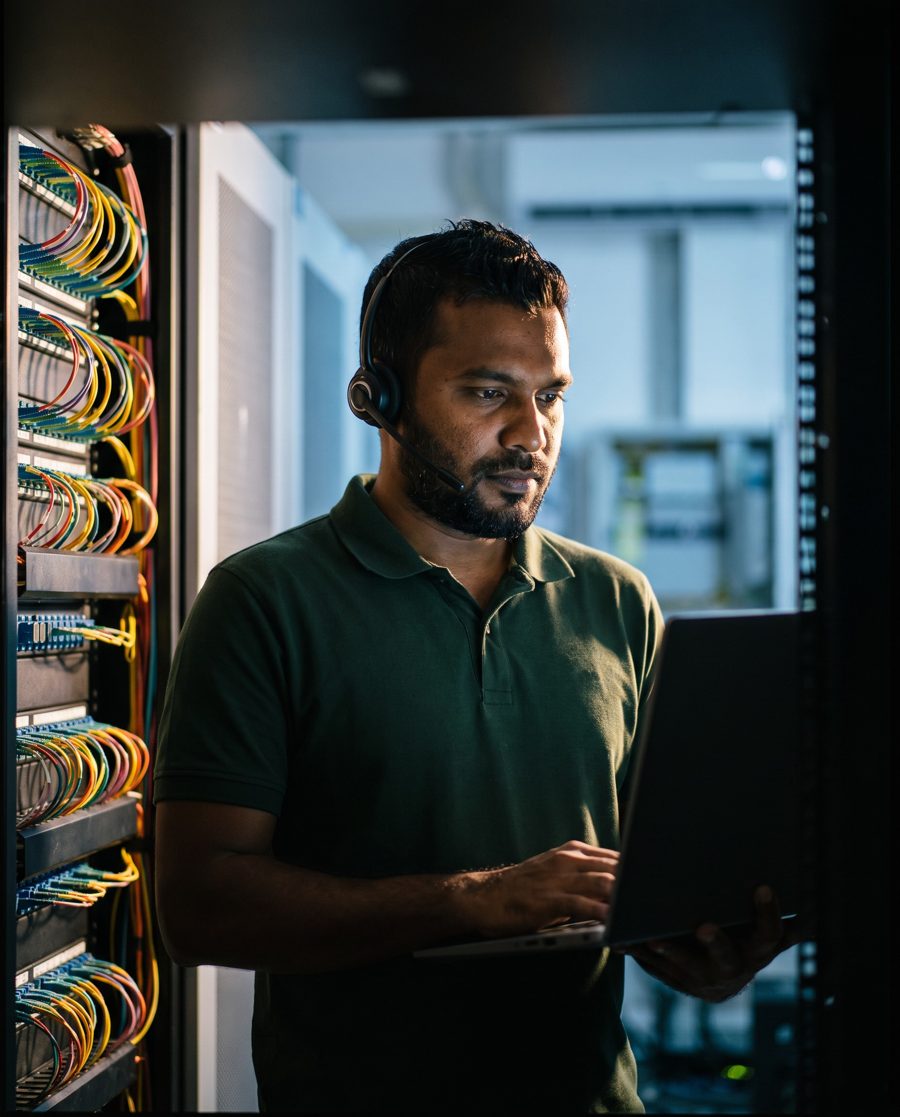 Network engineerRuns the fiber link to the landing station and the private network.
 University researcherTrains and runs models on reserved compute.
Running a liquid-cooled GPU site needs electricians, marine technicians, network engineers and operators. We want most of them to be Maldivians.
An island build runs on boats, logistics, catering, accommodation and civil works. Those orders should stay in the country.
Access to GPUs is the hard part for a small country's universities and young companies. We plan to set aside capacity for them.
The nearest communities should see benefits they can use, and have a say in how the project is run.
Status. These are design intentions at the early-announcement stage. Their scope, targets and partners will be agreed with the Maldivian authorities and communities, then published with dates as approvals are confirmed.
Seven goals the project touches directly. Each one is tied to something the island is designed to do.
About 90% of annual energy from solar, backed by batteries, instead of imported diesel.
About 7,000 t of CO₂ avoided every year against a diesel-only island site.
Reef-safe moorings, bunded fuel storage and marine monitoring with local biologists.
No freshwater cooling, and a reserved unit that turns server heat into fresh water.
Technician training and reserved compute for Maldivian universities.
First-hire preference for Maldivians and local suppliers for island works.
A national-scale AI facility and fiber capacity that can also serve nearby atolls.
A commitment only counts if someone outside the project can check it. This is the cycle we intend to run.
Scope and targets settled with Maldivian authorities and the nearest communities.
Energy, water, diesel, jobs and training hours logged from the first day of construction.
One public report, reviewed by an independent party, with the figures below.
The advisory group reads the report and sets the next year's priorities.
Indicators we plan to publish. Targets will be set together with the partners above and are not yet fixed.
The technical numbers are on the project page. These are the duties we accept.
An environmental impact assessment is completed before construction, and the regulator is involved from the start.
Required before buildNo clear-cutting for solar. Existing trees are kept where possible, native species are planted, and at least half of the island remains natural vegetation in every phase. The plan keeps 79%, 68% and 57%.
Design rule, every phaseMoorings and anchoring are planned to avoid damage to corals. Fuel storage is bunded and has a spill plan.
Design ruleTwo design choices that remove the biggest risks to a small island's water.
Design ruleSpace is reserved for a desalination unit driven by server waste heat, so a by-product becomes fresh water.
Reserved in the planWe intend to publish energy, water, diesel use and reef-monitoring results every year, reviewed by an independent party.
Planned commitmentWrite to us and we will respond personally.
Government, community, partner and press enquiries use the same address.